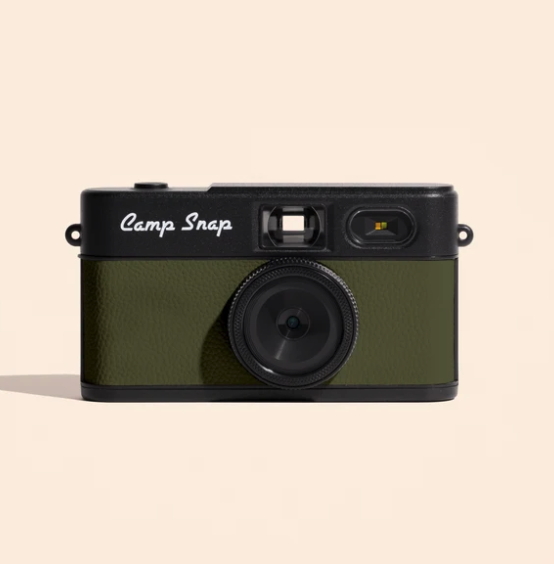
The Camp Snap 2. An exhibit
Presented without a screen. Viewed only later, and only with great anticipation.
There is, the makers insist, no monitor of any kind on the rear of this device. A deliberate omission, executed with the precision of a magician declining to reveal the trick. One does not check the photograph. One simply believes in it, the way one believed, once, that the film would come out fine — back when a roll of 24 exposures went to be developed, and you waited, and you hoped, and half the pictures were of someone's thumb, and it didn't matter, because you'd find out together, all at once, a week or more later.
So what can one expect from Camp Snap 2?
An eight-megapixel sensor, modest and unbothered by ambition, paired with a lens of exactly 26 millimeters, as though measured by a very serious child with a very small ruler. Through the tunnel-shaped viewfinder, the world arrives slightly smaller and slightly more dignified than it actually is, not unlike squinting through a disposable camera at a birthday party in 1998, certain the flash had already gone off, certain it hadn't, no way to know until later.
Six filters are provided, cycled with a single button, requiring no telephone, no application, no further internet permission:
Standard. Vintage One. Vintage Two. Vintage Three. Analog. Black-and-White.
Each a small, curated mood, like place settings at a very particular dinner, or six different disposable cameras you might have found at six different drugstores, back when the drugstore was also where you picked up the pictures.
Should the operator be young, or simply prone to fidgeting, a feature called Camp Lock may be engaged — holding the filter button for precisely ten seconds disables further tampering, a kind of gentle, mechanical supervision.
Five hundred photographs per charge. A shutter sound, included on purpose, so that one may hear the moment being kept, the way a camera used to sound like it meant something. A thread, 30.5 millimeters in circumference, awaiting whichever small glass accessory one might someday deem necessary.
It comes, appropriately, in several colors, some best described as translucent — as though the camera itself were only half-convinced it belonged to the present decade at all.
A brief, personal aside: what I love about this one is that it brings back a very specific feeling I didn't know I missed. That little suspended moment between taking a photo and actually seeing it. No screen to check, no instant verdict, no deleting and retaking until it's perfect. You just have to trust the moment and let it go. And then there's that same small thrill I remember from picking up an envelope of prints: half surprise, half memory, seeing exactly what you lived through, but for the first time.